Knowledge Center
This Gold Phoenix PCB Knowledge Center article explains the benefits of ENEPIG for gold wire bonding, including its palladium barrier, gold deposit thickness and key process steps.
ENEPIG (Electroless Nickel, Immersion Palladium, Immersion Gold) was developed in response to challenges with the immersion gold process and Black Pad Syndrome. Black Pad is the hyper-corrosion of the underlying nickel and was a problem for both PCB assemblers and manufacturers. The nickel deposit was identified as the source of the issue.
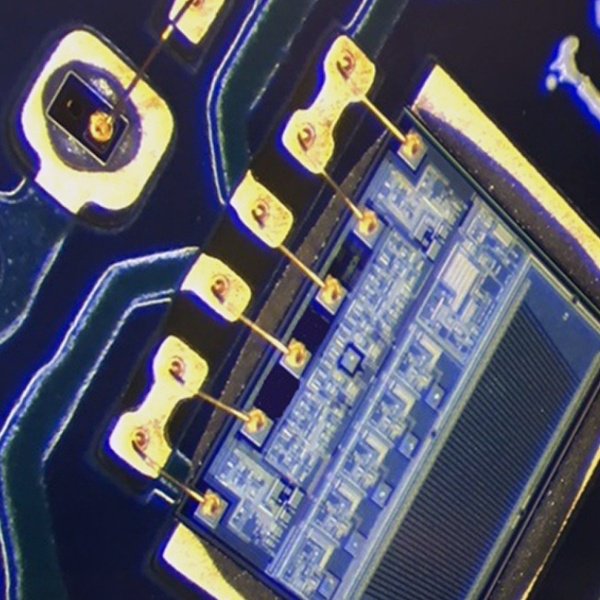
Magnification of PCB showing Black Pad.
The cause of the high nickel corrosion rate was initially unclear, which led to efforts to introduce a surface finish that could avoid the nickel issue. It was found that palladium acts as a diffusion barrier when deposited between the nickel and the gold.
The palladium barrier allows ion displacement between the nickel and gold to continue while preventing the nickel from diffusing into the gold and bonding to its crystalline structure. This keeps the gold deposit pure and suitable for wire bonding, which cannot be performed on standard immersion gold.
The role of phosphorous in nickel corrosion and Black Pad was later identified. ENIG chemistries and processes were then fine-tuned to practically eliminate Black Pad Syndrome. ENEPIG did not gain significant traction, but it still provides a wire-bondable surface finish and allows a thicker gold deposit than standard ENIG.
With standard ENIG, when the nickel surface is completely covered by the gold deposit, ion displacement stops and the gold ceases to deposit.
Gold thicknesses above 3 micro-inches are difficult to maintain consistently with standard ENIG, and thicknesses of 4 micro-inches or more cannot be considered. With ENEPIG, gold deposits as high as 6 to 7 micro-inches can be processed because of the palladium barrier between the nickel and gold.
Issues that can occur with this finish include discoloration, proper control of gold deposit thickness, and conformance to the shape of the pads.
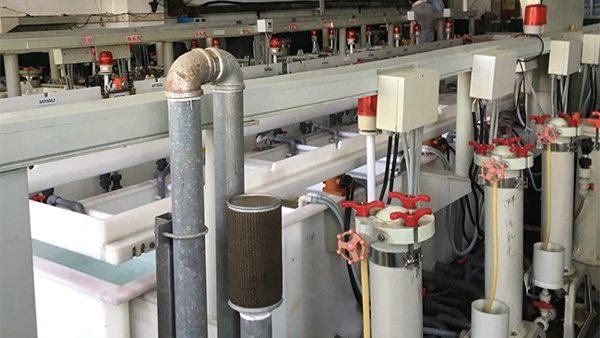
PCB cleaning line during the ENEPIG process.
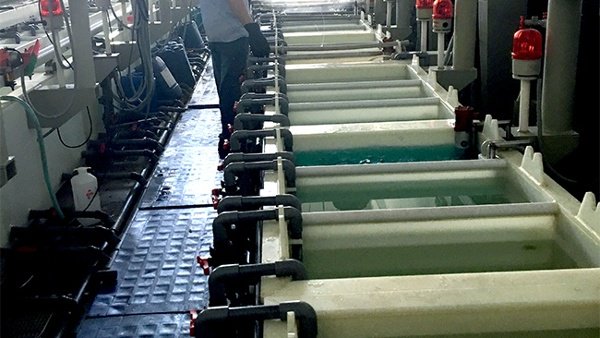
Aerial view of PCB cleaning during the ENEPIG process.
Before applying any surface finish, the underlying copper must be thoroughly cleaned of oils and contaminants from previous processes. These contaminants can interfere with later processes such as micro-etching and metal deposition.
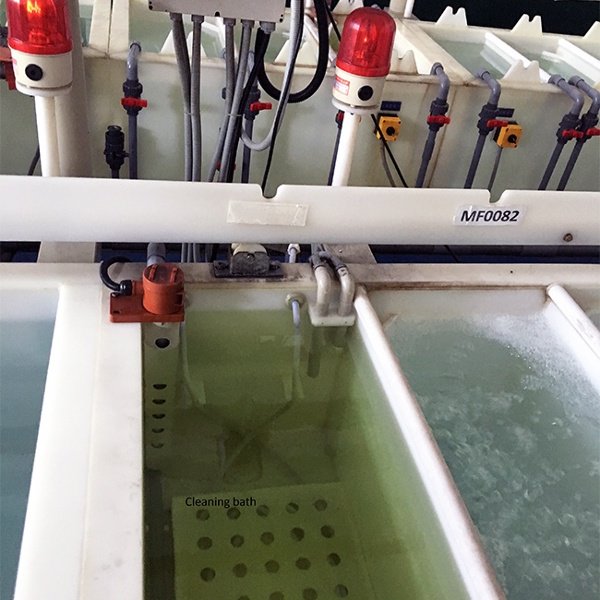
PCB cleaning before application of the surface finish.
The micro-etching step roughens the copper surface so that the adhesion of deposited metals is strong and complete. This is achieved by removing a small amount of copper from the surface using an oxidizer-acid combination such as peroxide and sulfuric acid.
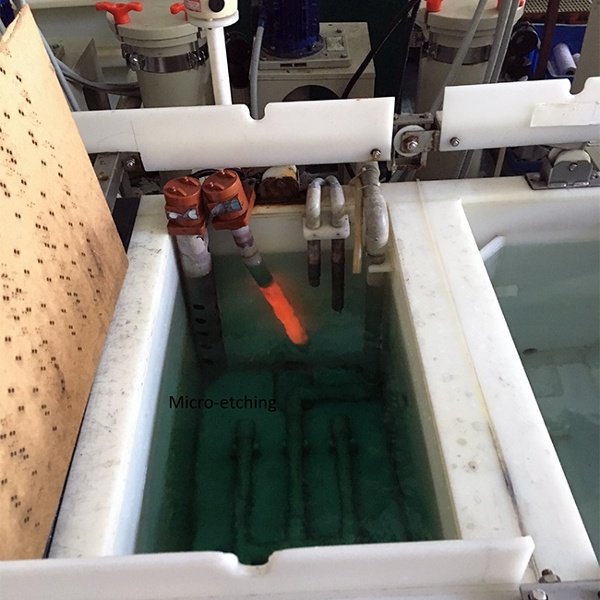
Printed circuit board during the micro-etching process.
This step lightly coats each panel with a catalyst that attracts the nickel ions to bond with the copper.
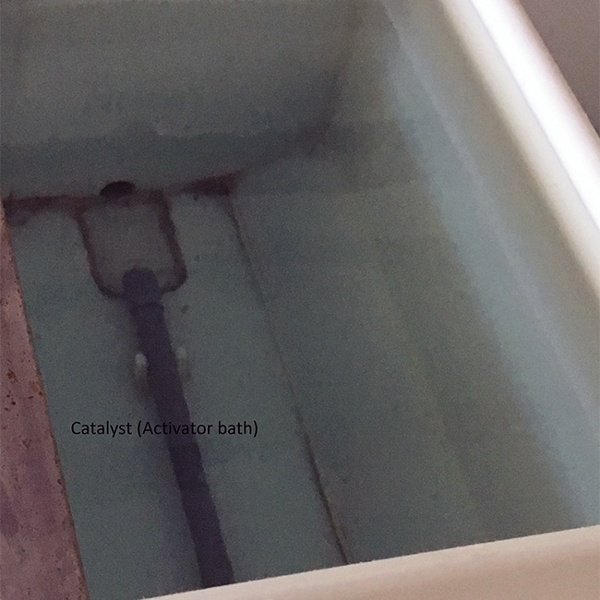
Catalyst activator bath in the ENEPIG process.
At this step, the required thickness of nickel is deposited on the part. The nickel bath is highly active and must be carefully monitored to maintain the balance and parameters of the nickel chemistry. Phosphorous control is extremely important.
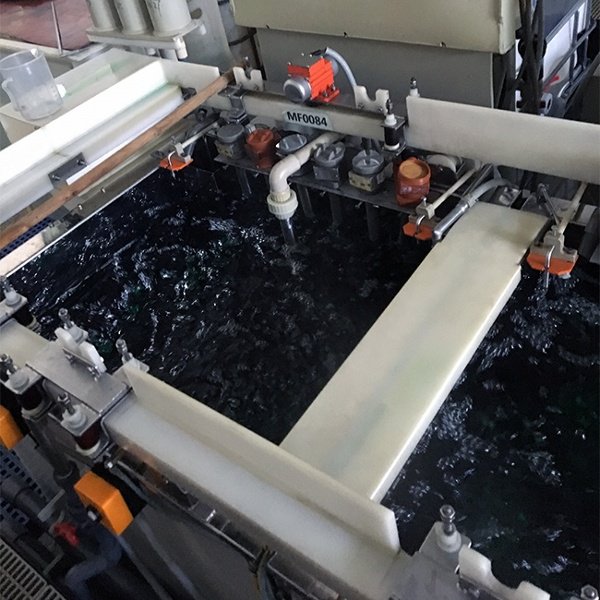
Electroless nickel stage of the ENEPIG process.
The palladium diffusion barrier is deposited onto the nickel surface through an electroless process. The diffusion properties of the palladium layer are due to the presence of phosphorous in the deposit.
The phosphorous content is produced by a reducing agent. Multiple reducing agents are possible, and sodium hypophosphite is one option.
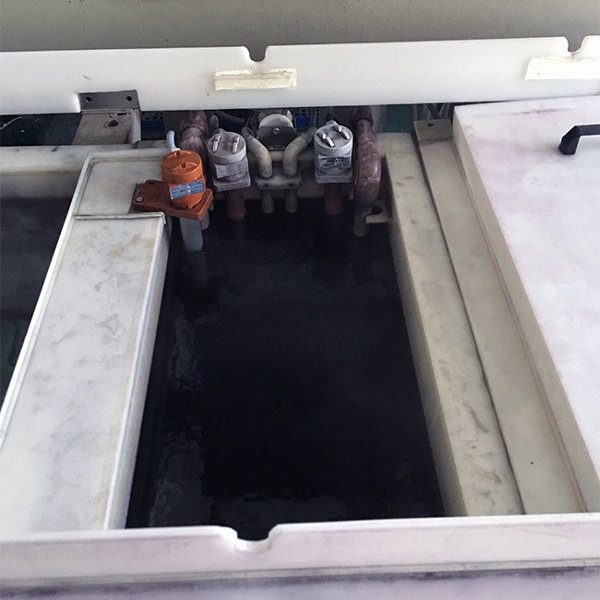
Palladium bath during the ENEPIG process.
At this step, a thin layer of gold is deposited onto the fresh layer of electroless palladium.
With standard ENIG, the gold layer averages 2 to 3 micro-inches and tends to be self-limiting according to the ratio of nickel ions to gold ions. With the palladium diffusion layer, thicker gold deposits are attainable to aid the wire-bonding process.
The gold ions are kept in solution using arsenic, which presents a toxic-hazard consideration.
ENEPIG can also be considered when there are challenges with an existing ENIG surface finish or when seeking cost savings compared with wire-bondable hard gold.
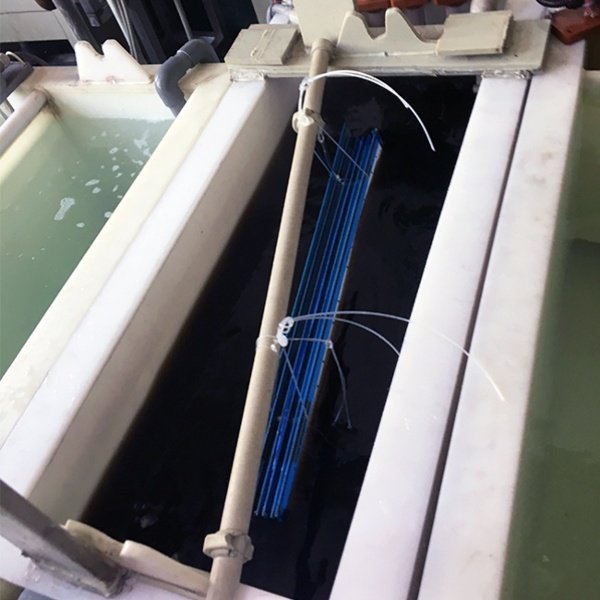
Immersion gold stage of the ENEPIG process.
The final steps include multiple rinses, drying, and final inspection.
Complete drying is necessary because moisture on the gold surface can lead to spotting and oxidation on the finished product. Final inspection consists of visual cosmetic inspection and X-ray measurements to determine the thickness of the nickel, palladium, and gold.
Capabilities
Payment Methods


Specials Price
Carriers


Support Hobbyist
Certificate


Customer Support
Follow Us