Knowledge Center
This Gold Phoenix PCB Knowledge Center article explains common PCB shorts and opens, the role of a netlist in preventing them, and practical ways to manage errors after manufacturing.
PCB manufacturing spans prototypes of a few pieces to repetitive production runs of many tens of thousands of circuit boards, with quality as a consistent priority.
Each PCB is carefully laid out and reviewed during engineering. Unfortunately, problems can still arise, and it is sometimes not until the PCB is completely manufactured, assembled, and integrated into the final product that a circuit board malfunction is discovered.
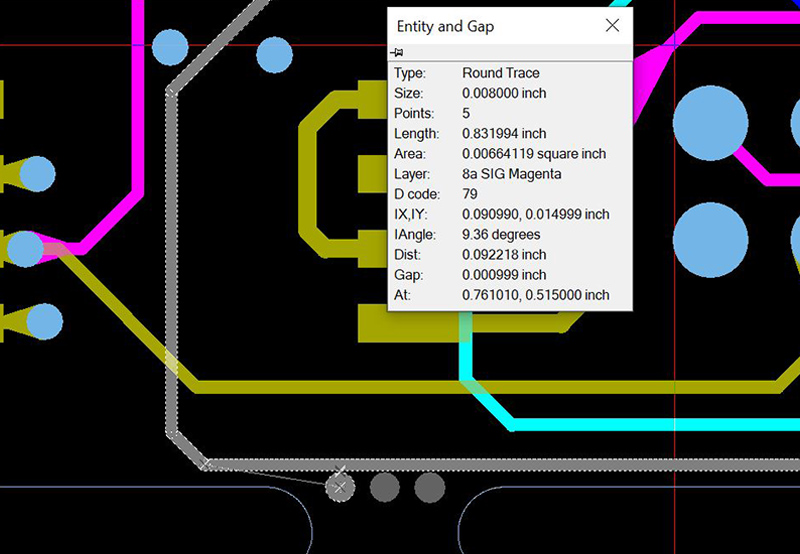
Circuit too close to the PCB edge can be damaged or severed by tooling breakaways and cause delamination.
Sometimes things can go wrong during the layout and routing phase. Shorts or opens are two of the common issues. A short is an unintended electrical connection between two points and an open is an unintended break between two points. Either can disrupt the functionality of the printed circuit board’s final product.
A netlist can be requested from the design team as part of the project deliverables. The netlist is a database of electrical connections that maps the intended connections and helps confirm that the Gerber files are correctly laid out for the final product. It is loaded with the Gerber files into the CAM program for verification that the design is correct.
The netlist is also used throughout the CAM process to verify no changes have been made within the manipulation of the data. All CAM, no matter what program is used, has the potential for human error. When no netlist is provided, the engineer will extract one from the Gerber files; however, this does not verify the layout and routing are correct as provided. It only verifies that no errors were introduced during CAM.
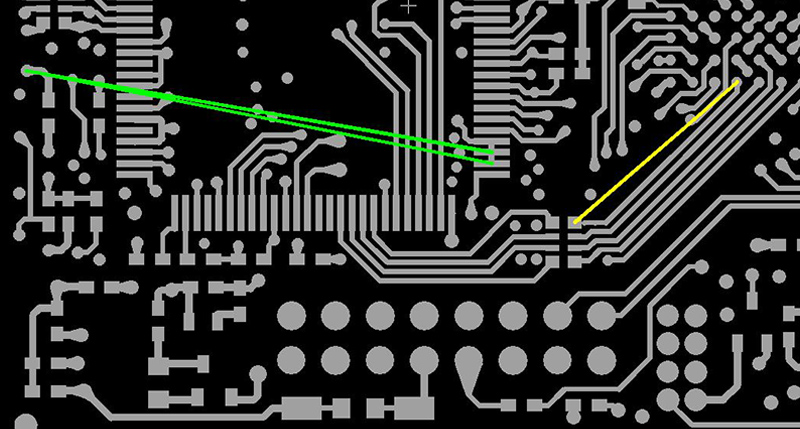
Shorts or opens can also be found according to netlist.
Shorts or opens in a PCB can cause the part to be scrapped and redesigned by the design team. In some cases, this costly error is found too late to save the part. When the error is found at assembly, usually something can be done to save the part from being scrapped.
For example, a short between two unintended points can be managed by cutting the connection. The cut is usually done by digging through the protective solder mask layer with a knife-like object down to the circuit and then cutting the copper. Once the copper track is broken, it can be checked with a meter to be sure the cut is clean through. It is an unsightly mess, but it does work. Often touchup in the area with mask is needed to protect the copper that has been exposed from shorting to components or exposure to the elements.
An open between points is another issue managed by adding a jumper wire to the PCB. Once the open is identified, often a wire can be hand soldered to the points to bridge the disconnect. In both cases, this adds time and cost of materials and labor to save the parts from being scrapped. Providing a netlist could have prevented both issues from happening.

Broken traces can also be found according to netlist.
In some cases the cost of prototyping and troubleshooting the product and remaking the part is disproportionately high. During the prototype phase of the PCB, there are options that will allow for some savings while the product is proofed.
Going back to the drawing board of design and layout is not always needed. Sometimes there isn’t a way around it due to certifications, and skipping certification steps is not advisable, but some of the time tweaks can be made through an approval process at your PCB engineering level.
A trace cut or add, a clearance or thermal connection add can be completed easily and cleanly. Doing this versus a complete revision is much more cost-effective than a complete re-spin. Documenting the process through an approval is sufficient during prototyping.
Capabilities
Payment Methods


Specials Price
Carriers


Support Hobbyist
Certificate


Customer Support
Follow Us