Knowledge Center
This Gold Phoenix PCB Knowledge Center article explains the use of strain relief with rigid-flex printed circuit boards (PCBs).
For rigid-flex printed circuit boards, the space joining rigid material to flex material (Transition Zone) sometimes contains imperfections that, although acceptable, could impact effectiveness of the final part. Transition zone imperfections can include any of the following:
Adhesive squeeze-out
Protruding dielectric materials
Crazing
Haloing
If the parts are flexed at the interface, the remaining cured resin could damage the underlying flexible laminate. To protect the underlying flexible laminate, flex PCB designers require a strain relief epoxy in the flex transition zone. The applied, cured epoxy will help to extend the bending area past the remaining cured resin, as shown in the illustration below.
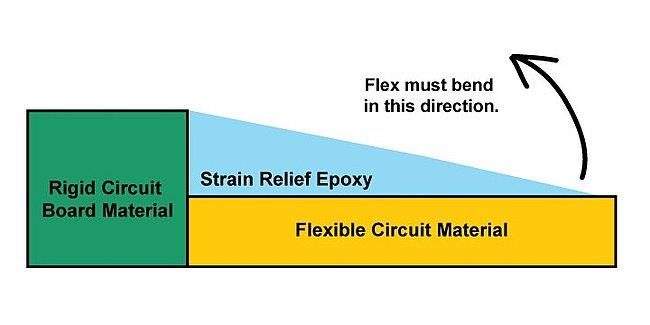
This strain relief epoxy can be controlled to be either rigid or flexible, depending on the requirements of the final product. It is important to note that when designing strain relief into a rigid-flex PCB design, IPC-2223, section 5.2.9 should be referred to for complete guidelines and limitations.
The transition zone is a very sensitive area of a printed circuit board that must be constructed with great care. Even slight miscalculations can result in errors that impact PCB performance. Applicable rigid-flex design requirements should therefore be considered during the design stage.
Capabilities
Payment Methods


Specials Price
Carriers


Support Hobbyist
Certificate


Customer Support
Follow Us